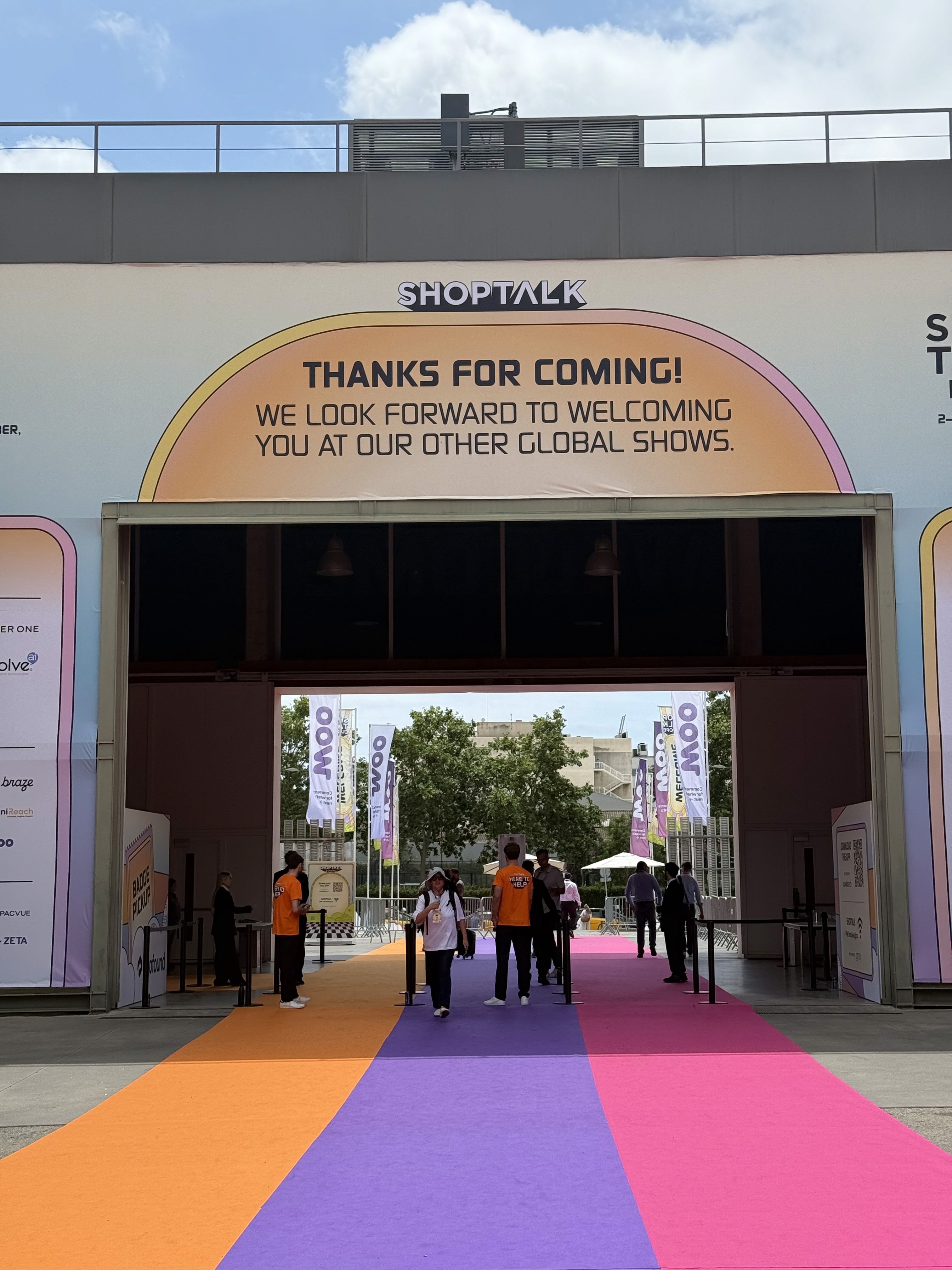
ShopTalk Europe 2026: After Everyone Finished Talking About AI, Retail Became Human Again
The future of retail just happened at Shoptalk - and most brands are already behind. Tapaya's CCO Elvis Sinijs was in the room and breaks down exactly what's coming next.

Elvis
CCO
Trends
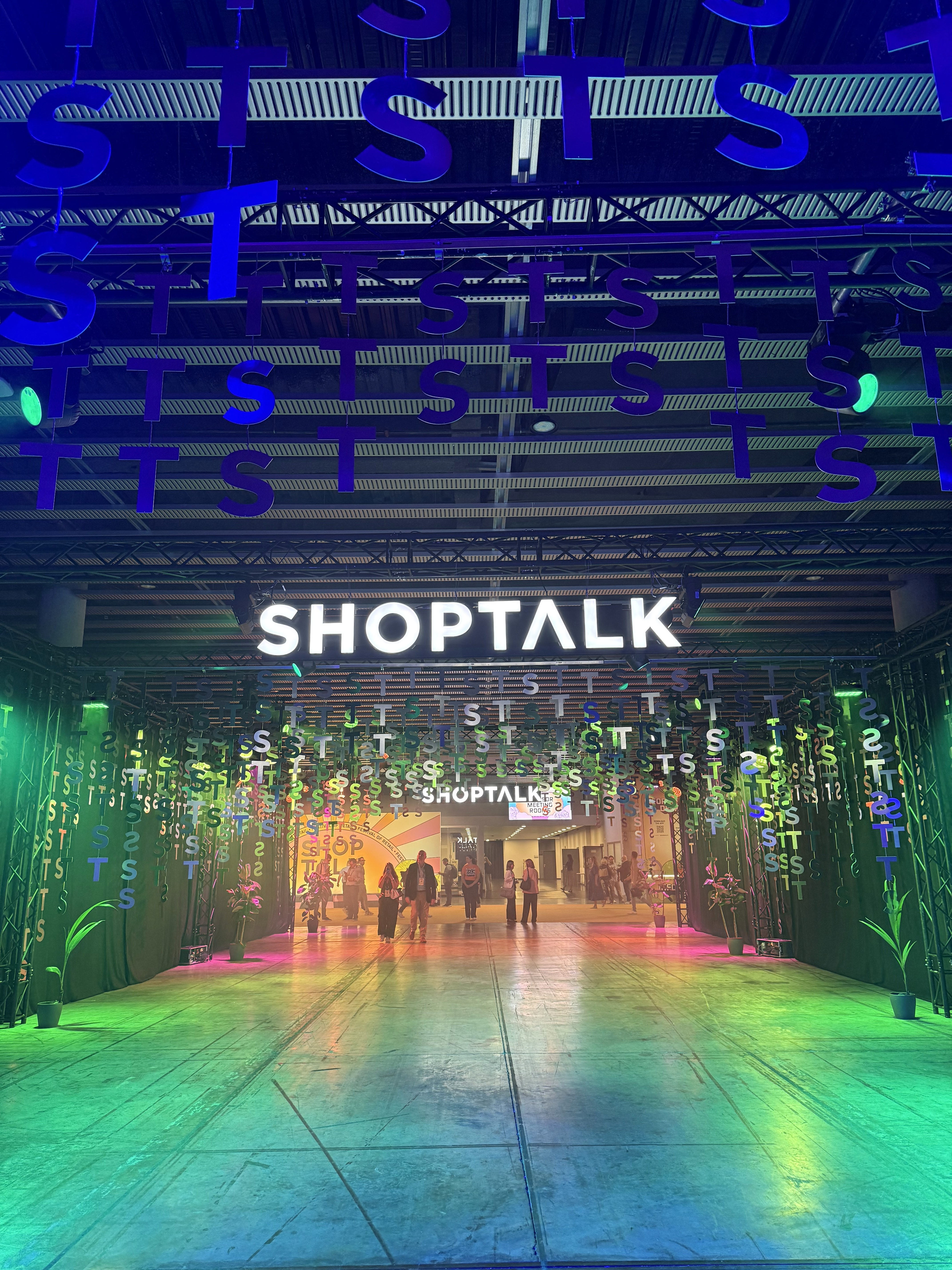
There is a strange rhythm to big conferences.
On the first day, everyone arrives with energy. The stands are perfect, the pitches are polished, the demos are sharp, and every company seems to have found a way to place the word “AI” somewhere between its logo, its product story, and its future vision.
ShopTalk Europe in Barcelona was no different. AI was everywhere.
It was in the keynote sessions. It was on the exhibition floor. It was in the meeting rooms. It was in the investor conversations. It was in the casual introductions between coffees. Every second company seemed to be using AI to reinvent retail, customer service, personalization, product discovery, marketing, inventory, operations, loyalty, or all of the above.
And to be clear, a lot of it matters.
AI is not a side trend in retail. It will reshape how retailers understand customers, manage stores, forecast demand, personalize experiences, and operate across channels. Anyone pretending otherwise is either not paying attention or is already behind.
But something interesting happened as the conference moved forward.
After the first wave of “AI this” and “AI that”, people started looking for something else.
Not because they stopped believing in technology. Not because AI suddenly became irrelevant. But because after enough polished pitches and enough future-facing slides, the most interesting conversations became the ones that felt real.
The conversations that stayed with me were not the ones where someone explained another AI-powered feature.
They were the ones where people started talking about what retail is actually about.
A customer walking into a store.
A sales associate reading the situation.
A buyer asking questions.
A moment of trust forming between two people.
A brand trying to create an experience that feels personal, not automated.
That was the real undercurrent of ShopTalk for me. The more everyone talked about artificial intelligence, the more obvious it became that physical retail still depends on something deeply human.
Over the course of the conference, I had the pleasure of meeting and speaking with teams connected to some of the most recognised brands in the world, including Kering, Gucci, LEGO, COS, and many others. These conversations were different in tone, but they kept circling around the same deeper question: how do you improve retail without losing the connection that makes retail valuable in the first place?
That is not a theoretical question.
Retailers are under enormous pressure. Customers expect digital convenience inside physical stores. They expect staff to know more, respond faster, personalize better, and remove friction from every step of the journey. At the same time, retailers need to manage costs, store operations, staffing challenges, legacy systems, payment infrastructure, loyalty integrations, and an increasingly complex technology stack.
So the real challenge is not simply “how do we use AI?”
The real challenge is: how do we use technology to make the human retail experience better?
That difference matters.
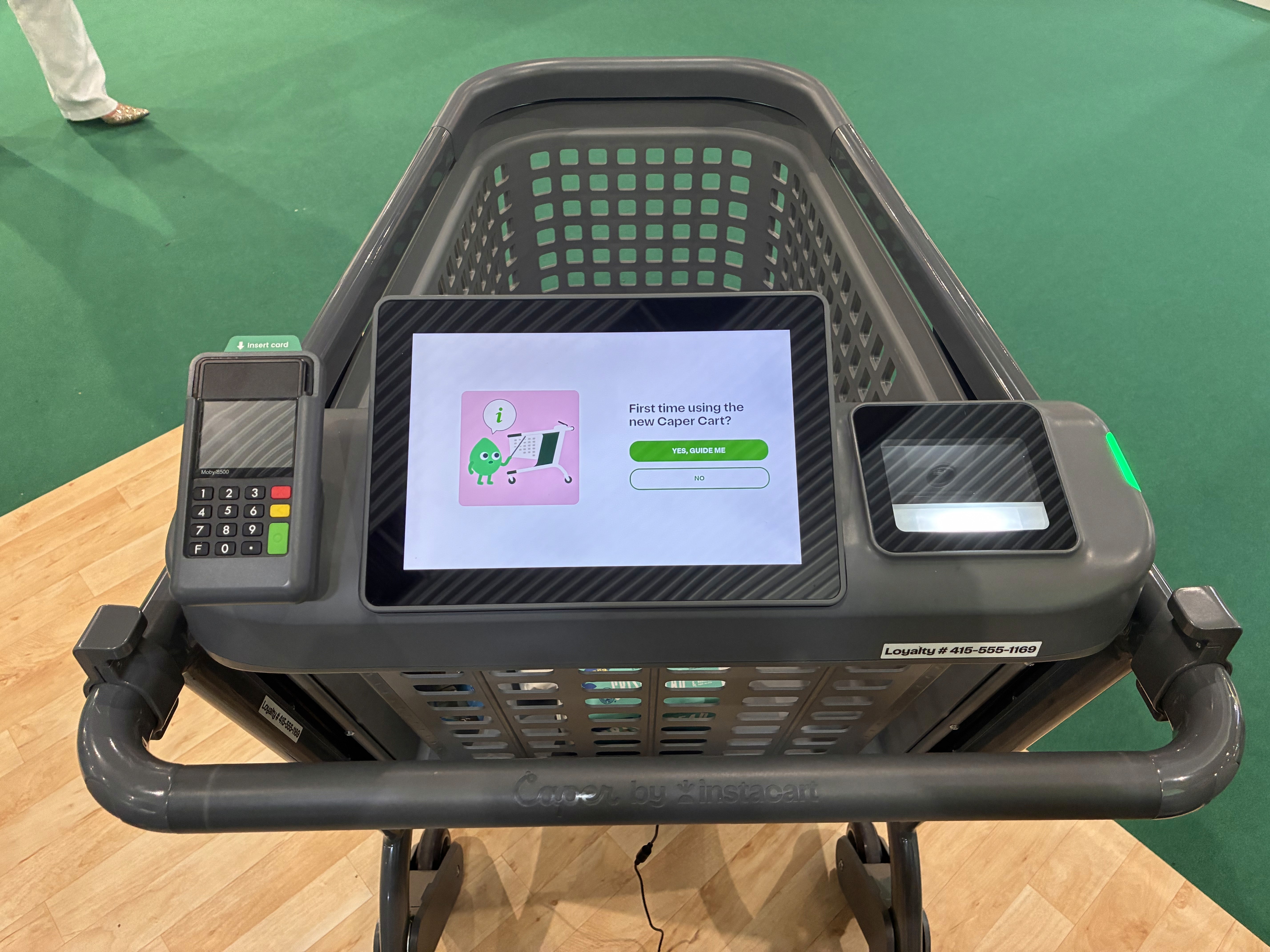
Because nobody enters a store hoping to experience a payment system. Nobody walks into a luxury boutique, a toy store, a fashion store, or a lifestyle brand thinking about acquiring rails, terminal estates, settlement flows, or payment schemes.
People remember how they were treated.
They remember whether someone understood what they wanted.
They remember whether the experience felt smooth or awkward.
They remember whether buying something felt natural or whether the process interrupted the moment.
This is where my payments brain could not switch off.
Because behind many of the conversations about customer experience, there was a very practical operational question hiding in plain sight: where should payment happen?
For decades, retail has been built around the idea that payment belongs at the end of the journey. The customer browses, decides, walks to the checkout, queues, pays, and leaves. That model is familiar, but it is not always ideal.
In many retail environments, the checkout counter is not an enabler of experience. It is a break in the experience.
The customer moves from discovery to waiting. From conversation to transaction. From personal attention to process.
And once you see that, it becomes difficult to ignore.
This is why SoftPOS came up naturally in so many of my own reflections after the conference. Not because SoftPOS is just another payment technology, and not because the world needs another buzzword. It matters because it changes where payment can happen.
If a smartphone can become a payment acceptance device, then the store associate does not need to send the customer somewhere else to complete the purchase. The transaction can happen where the conversation is already happening. On the shop floor. At the fitting room. During assisted selling. Inside a pop-up activation. In a queue-busting moment. During a product consultation.
That may sound like a small shift, but operationally and emotionally it is significant.
SoftPOS is often discussed as a way to reduce hardware dependency. That is true, but it is not the full story. The more interesting opportunity is that SoftPOS can help retailers preserve the momentum of the customer relationship.
The associate can stay with the buyer.
The experience does not need to be handed over to a separate checkout flow.
The payment becomes part of the service, not the end of the service.
That is where physical retail starts to become genuinely interesting again.
At the same time, another topic kept sitting in the background of my thinking throughout ShopTalk: the Digital Euro.

For a long time, Digital Euro discussions have lived mostly in policy, regulatory, and banking circles. That is understandable. The initiative is complex, and many of the early questions naturally belong to central banks, PSPs, schemes, technical providers, and public institutions.
But retailers will ultimately be one of the most important parts of the story.
Not because they care about payment ideology. They do not.
Retailers care about whether something improves customer experience, reduces complexity, lowers cost, increases trust, or creates new commercial possibilities. If the Digital Euro wants to matter in daily life, it cannot remain an institutional concept. It needs to become useful at the point where people actually buy things.
And that brings us back to the physical store.
The future of Digital Euro acceptance will not be decided only in technical documents, rulebooks, or policy discussions. It will also be decided in very practical retail moments. Can a customer use it easily? Can a merchant accept it without friction? Can it work naturally inside the existing retail environment? Can it support the kind of experiences retailers are trying to build?
That is why the connection between Digital Euro, SoftPOS, and physical retail feels important.
One is about the future of European money.
One is about the future of payment acceptance.
One is about the future of the store.
The overlap between them may become much more important than people currently realize.
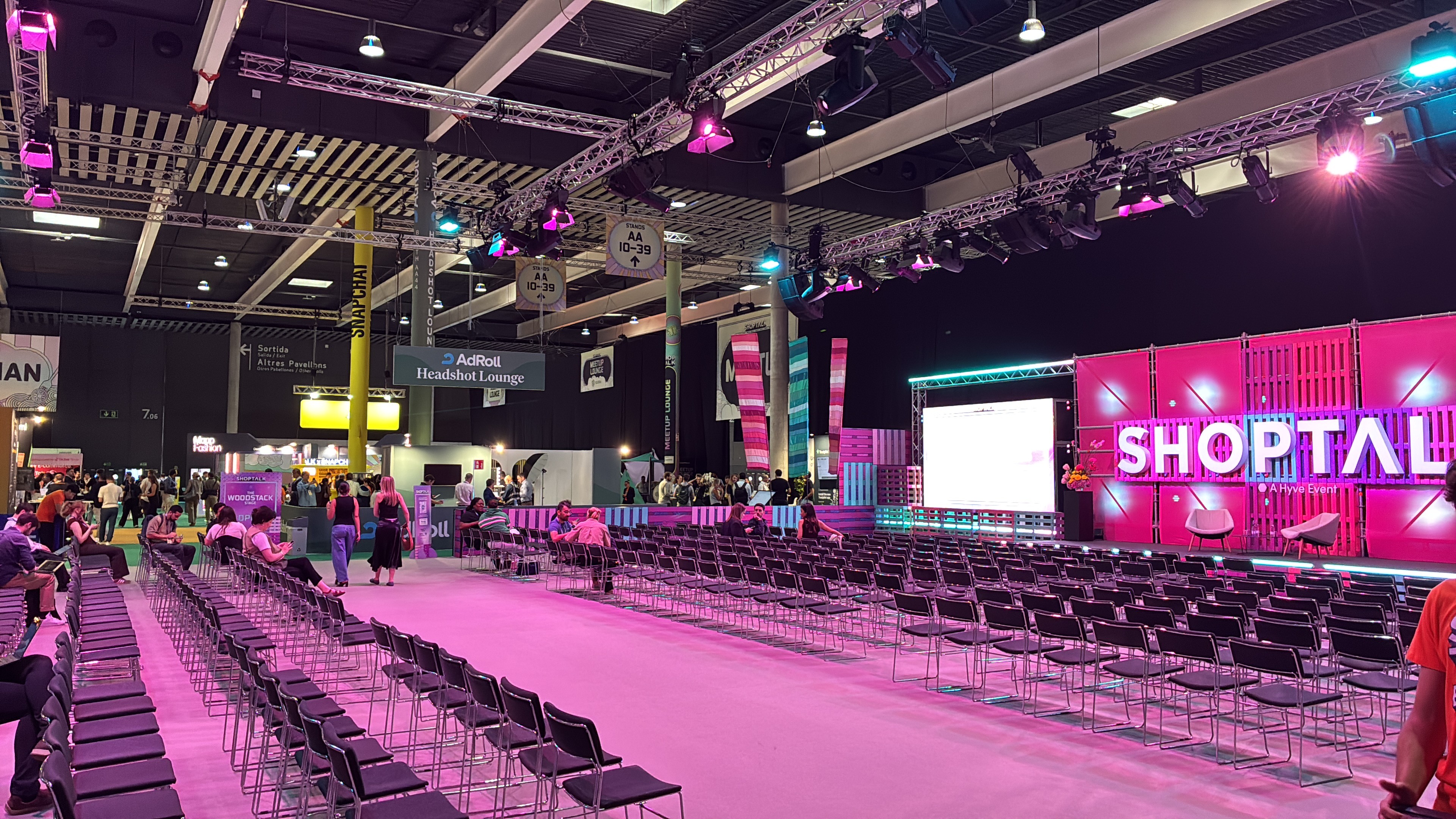
Walking away from ShopTalk, I did not feel that the future of retail would be less technological. Quite the opposite. Retail will become more technological, more data-driven, more automated, and more intelligent.
But the winners will not be the companies that simply add AI into every sentence.
The winners will be the companies that use technology to make retail feel more human, not less.
Because after all the demos, all the meetings, all the stands, and all the noise, the moments that mattered most were still the human ones.
The handshake.
The conversation.
The buyer explaining what they really need.
The retailer trying to understand how to serve them better.
The payment disappearing into the background.
The relationship staying in the foreground.
That was my biggest takeaway from Barcelona.
AI will change retail.
But the future of retail will still belong to those who understand people.